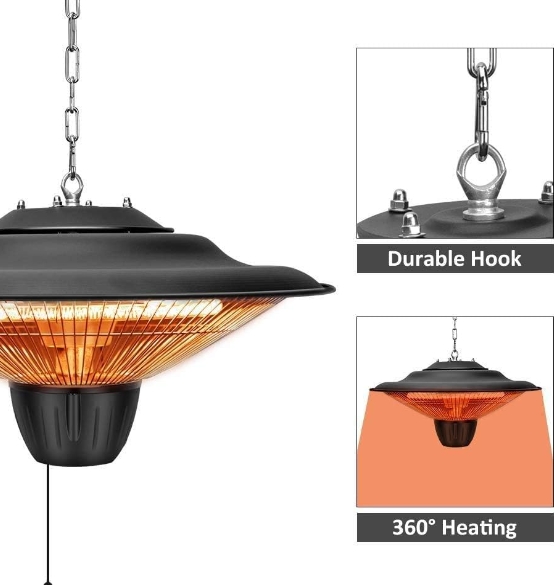
Keeping Your Bathroom Radiant Heaters from Becoming a Hazard
Putting radiant heat lamps in a bathroom is basically a battle against steam. You’ve got water vapor hitting a scorching hot quartz tube, and that’s a recipe for trouble. If your insulation isn’t up to the task, you’re looking at short circuits or ground faults. Not a great way to start your morning.
Stopping the Leaks
We focus heavily on where the terminals meet the housing. In a steamy bathroom, a simple air gap just won’t cut it. We use high-temp ceramic insulators and reinforced silicone gaskets to seal everything tight. Why? Because of “tracking.” That’s when moisture builds a little bridge across the insulator, letting electricity go where it shouldn’t. The wiring matters too. You need cables that can handle being damp 24/7. We go with double-insulated cables to keep the current exactly where it belongs—inside the wire. And if you’re tucking these into a ceiling grid, please use IP-rated junction boxes. You don’t want condensation pooling around your terminals.
Heat, Stress, and Breathing Room
Heat makes things move. When a lamp jumps from 20°C to 600°C, it puts a ton of mechanical stress on the seals. To handle that, we use specialized expansion joints. They stay tight even when the temperature swings wildly, which keeps the steam out of the electronics. One thing to watch out for: the footprint. If you cram the heater too tightly into a recessed ceiling, the heat just sits there. It bakes the wiring. Over time, that insulation jacket degrades and—pop—you’ve got a burnout.Give the unit some room to breathe.
The Trade-off
Here’s the thing: more safety usually means more shielding or thicker casings. That can slightly dampen the infrared throw. You get a much safer install, but you might need to mount the lamp a bit lower to keep that cozy, warm feeling. Also, keep an eye on your voltage drop if you’ve got long cable runs. You want to make sure the lamp actually hits its rated wattage, otherwise, it’s just a fancy lightbulb.