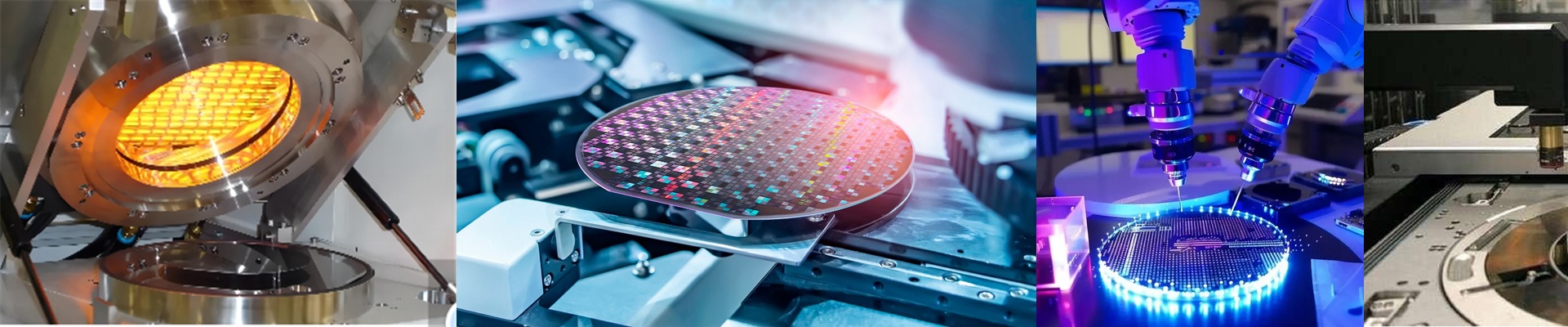
On the fab floor, you learn fast that a 0.5°C drift in bake temperature can take a photoresist profile from “on spec” to scrap in a heartbeat. Infrared quartz lamps aren’t just heat sources—they’re the thermal anchor for lithography and photoresist processing. We build these lamps around wafer-level control, holding ±0.1°C uniformity across the substrate so critical dimensions stay inside the budget. What matters, technically Short-wave infrared quartz delivers fast-response energy that drives into the photoresist without cooking the films underneath. The reflectors are integrated, and the filament geometry is tight—together they give you repeatable contours. That’s how soft bake and hard bake profiles stay within ±0.5% setpoint stability. Cleanroom compatibility isn’t an afterthought. We use low-outgassing materials, sealed terminations, and a surface finish that keeps particle counts below threshold in Class 1–100 environments. Why it holds up, shift after shift You need thermal repeatability you can count on, not just on paper. These lamps lock in the thermal budget for every wafer, which cuts rework from edge bead and underexposure. Fast settling shortens cycle time without sacrificing profile control. Energy goes where it needs to go, so you’re not wasting it—utility draw drops while the bake margins your process deck requires still get met. What you need to plan for Installation has to be precise: alignment matters, and thermal management needs to be treated as part of the system, not an accessory. The output density is high, so the fixture must provide controlled cooling and solid electrical isolation. There’s a warm-up period before spectral stability settles in, and lamp swaps should be scheduled into preventive maintenance windows to keep process drift from sneaking up on you. When these lamps are matched to your equipment, they deliver the thermal discipline semiconductor processes demand.