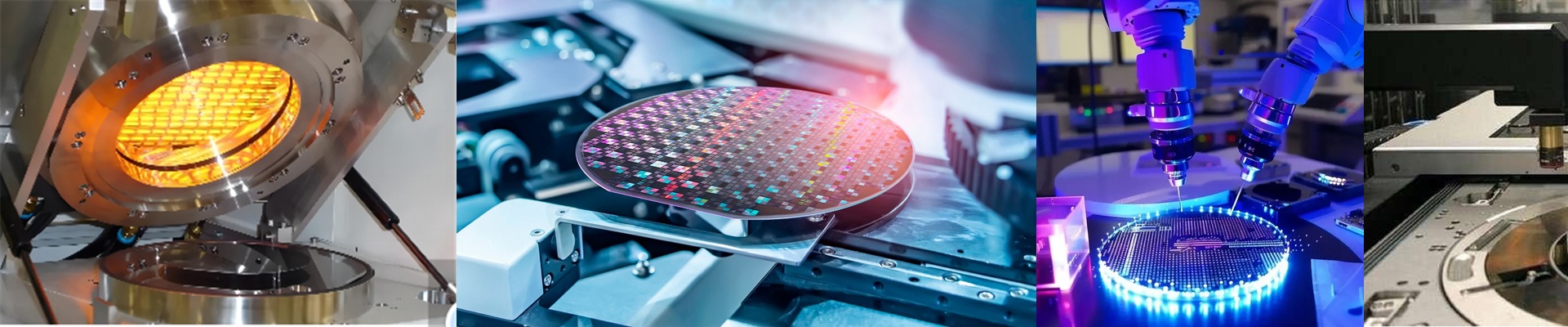
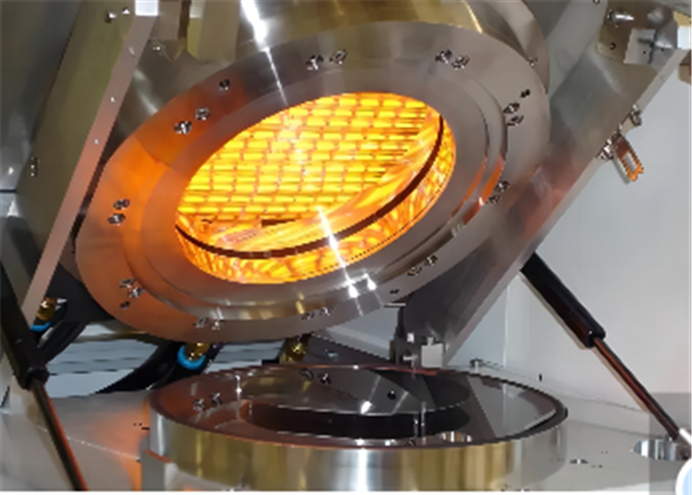
On the floor of an LCD panel fab, thermal budget isn’t a suggestion—it’s the line you can’t cross. Soft bake and hard bake set the dimensional tolerance across meter-scale substrates. If you drift more than ±0.5°C across the panel, CD uniformity goes sideways, yield drops, and the line stops. We built our infrared heaters for that reality, where every degree is a spec and every minute of downtime costs you wafer equivalents. Here’s what matters under the hood. The system runs short-wave infrared halogen emitters in a quartz assembly, so you get fast ramp-up and tight spectral control that matches polymer absorption. Temperature uniformity across the active area holds at ±0.1°C, and setpoint repeatability lands at ±0.2°C bake to bake. We close the loop with calibrated pyrometers, not thermocouples alone, so you’re measuring what the substrate actually sees. The heaters are built for Class 1–100 cleanroom duty: zero particle generation from the hot zone, materials that keep outgassing low, and fixtures you can clean without drama. Input power is matched to panel formats and oven footprints, with 208–480 V configurations and standardized connectors so integration into vendor tools is straightforward. In lithography bake modules, that precision shows up where it counts: consistent line width, less edge bead, and fewer rework lots. Fast thermal response shaves cycle time without compromising uniformity, which lowers energy per panel and keeps throughput steady. Reliability is baked in—emitter life is rated beyond 5,000 hours with maintained output, and thermal drift is constrained so process windows don’t drift between maintenance intervals. The payoff is predictable yield, fewer parameter excursions, and ovens that run on schedule. A couple of practical notes. Infrared heaters are line-of-sight, so panel geometry and reflectivity have to be accounted for in the thermal recipe. Integration means nailing alignment and shielding to keep stray heat off adjacent optics and sensors. And yes, plan for periodic emitter replacement and calibration windows. The system performs, but only if you treat maintenance as part of the process, not an afterthought.